Life and thoughts from a small-scale organic farm . . . and its farmers

This is a blog that explores ideas around the growing of food and community at Glen Valley Organic Farm.

Wednesday, September 15, 2010

Breeding Time

Fall is approaching and that means figuring out certain logistics . . . like how we will get our goats bred. We don't have a buck on the farm, so that means we'll have to take our dairy goats out on the town (or to another farm that is) to be bred.

I'm trying to figure out how the online dating ad would look for this: "Single female goat seeking non-committal male goat for 20 minutes. Must be from good milking stock."

The photo, by the way, was taken by Brian Harris last September. It shows two of Alyson's goats during mating season. For farmers without televisions, this is an exciting time of year.

The Canning Continues

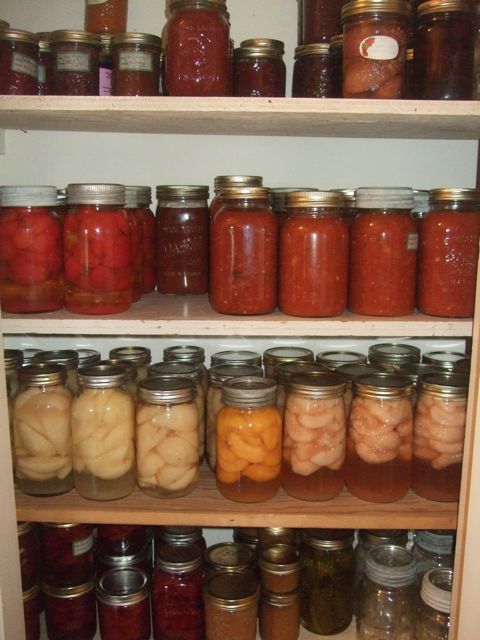
Our preserves pantry is filling up. We have tomato sauce, tomatoes, salsa, salmon, pears, peaches, plums, pickles and various jams ready for winter. Our freezer is also filling up with stocks for winter soups, salmon, corn and berries. The cheese fridge has four large rounds of Gouda aging.

Our apple orchard has a lot of October apples, so saucing is still coming up, along with making cider. We'll be happy when the preserving season is over. At the same time, since we started making cheese, canning fruit and veggies seems like a quick task!

A Peek Inside This Week's CSA Boxes

Here's what our Community Supported Agriculture subscribers are getting in their Harvest Boxes this week:

1 bunch Kale
1 head Red Oak Lettuce
1 bunch Golden Beets
3 lbs Carrots
1 Long English Cucumber
1 bunch Green Onions
3 lbs Cooking Onions
1 lb Shallots
1 medium Tomato
1 pint Blueberries

We were happy to be able to include cooking onions and shallots now that the sweet onions are finished. These onions are stronger than the sweet onions and can be stored in a cool, dark place (e.g. under the sink or in a pantry) if you're not going to be using them right away.

The shallots can also be stored. Shallots tend to be a bit milder than onions. They develop a very nice sweetness after a long, low-heat cooking and are can be used in savory tarts (particularly good with goat cheese). Check out these shallot recipes from Cookthink.com:
While you're at Cookthink.com, and if you're feeling overloaded with beets and/or carrots, you might check out some new ways of preparing them: carrots, and beets. Or, type in your ingredient of choice and see the selection of recipes.

This will be the only week for blueberries and likely the last week for tomatoes. We're not sure if zucchini or beans will make a reappearance now that the weather is cooling down.

Monday, September 6, 2010

Cycling the Coast: Farm Visitors

At the start of their journey: Our visitors as they head out for their next farm and cycling adventure.

This past week we had visitors on the farm. Ned and Charlotte are cycling the coast, starting in Vancouver and heading down through Washington, Oregon, California and into Mexico and beyond. They are trying to learn about farming, particularly focusing on the Community Shared Agriculture system, in the hopes of figuring out something to do in the realm of farming back in Britain when they return next year.

They arrived just at the right point in the season -- the diversion of guests was a welcome break from the tiring routine of the end of August and early September. They helped us get a thousand pounds (or so) of onions out of the fields and into curing. And they lent a hand at a couple of markets.

We were able to send them on their way with a few extra contacts for the journey south and hopefully a good impression of what can be done with a small-scale farm.

You can check out their project and perhaps answer some of the questions they post by reading their blog, Cropcycle. And if you know of some farms they should check out on their journey you can let them know via their blog as well.

Ned and Charlotte heading off to their next stop on the start of a great cycling adventure.

Tuesday, August 31, 2010

The Season of Saving Begins

Jeremy and Rob cleaning onions, September 2009 (photo courtesy of Brian Harris).

The daylight hours are shortening and there is a distinct sense of autumn approaching. Leaves are justing beginning to change colours on the trees and we're shifting gears into harvesting a new set of crops.

In many ways, this is a season of saving and I've been thinking about this a lot lately. Last week an exhibit opened at the Museum of Vancouver, featuring photography of BC Community Farms and Urban Agriculture by Brian Harris. The exhibit reminded me of the role of saving in farm life.

Throughout the exhibit there are quotes about food and agriculture. One of the quotes is by me, taken from a larger statement: "Knowledge about agriculture is no different than the knowledge contained in a seed. Both must be grown out each season, tested against the soil and weather. They must be passed from the minds and hands of one generation to the next. Those who assume mentorship roles understand that what they have amassed is useless unless passed along to others who will continue their work."

The quote in the exhibit is in shortened form:
“Knowledge about agriculture is like the knowledge contained in a seed. Both must be grown out each season then passed from the minds and hands of one generation to the next.”
The quote comes from real-life observations. My parents were the first generation in their families who chose not to farm. They did, nonetheless, keep a large garden in our backyard while I grew up and some of the gardening rubbed off on me. But it strikes me that so much knowledge about growing food can be lost in only one generation.

In a similar vein, there are varieties of beans, poppies and various other veggies that we lost when my grandmother stopped gardening in her 80s. Many of these varieties likely came with her family from the Carpathian Valley region of what is now Ukraine. The seeds formed the basis for the meals enjoyed at many family gatherings. In losing these seeds, we risk losing something greater in knowing our history.

The truth is, however, I didn't write the above-mentioned quote in an essay or speech. Rather, Brian asked me for a quote on the theme of mentorship while he was designing the exhibit. I actually received his request while on a winter vacation, enjoying the farmer's markets of Hawaii.

Now the quote has me thinking that an essay on mentorship and the transfer of knowledge in agriculture is due. I started writing some rough notes yesterday. Daily work on the farm is serving as an inspiration for the piece, particularly as we begin to do a lot of saving.

This past week we brought up the first storage onions and shallots for drying. Once the tops of the onions start to die in the field we pull them out and bring them into a dry space to prepare them for winter.

A few of the onions brought up from the field yesterday and laid out in the coldframe this morning.

The onions get laid out in our coldframes, where they will dry for a few weeks. Once the tops and roots are dried completely, the bulb is sealed and can be cleaned. The tops and roots are cut off and the outer layer of skin is removed, leaving a beautiful, clean onion or shallot. The bulbs are bagged and put away in a storage room where we control the humidity and temperature through the winter until everything is sold.

Meanwhile, the end of summer also marks the point when seeds must be harvested for next year's crops. While we purchase most of our seeds for growing, there are a few crops from which we have been trying to save seed.

A handful of golden beet seed, harvested this fall.

Last fall I saved a few bags of the best beets we had and stored them until this spring. Early in the spring I planted out the beets. Now, many months later, we're harvesting the seed. The beets, in particular, are a crop I think we should be able to save and adapt a variety to excel in our growing conditions here in the Lower Mainland.

Another seed we saved this year is from our crop of fava beans. Beans are an easy crop to save seed from and favas, given their size and early maturity, are particularly nice seeds to grow.

Thousands of fava beans dry in a bin after shucking.

Finally, saving is a huge theme in our kitchens as we preserve food through canning, drying and freezing. We spend long hours doing this work in the fall, and we always appreciate our work throughout the winter and spring as we enjoy the memories of summer on our taste buds.

Saving, whether it be seeds, food, knowledge or even money is something we don't do much of these days. We trust that answers to our questions are only a google away. Seeds are purchased from catalogs and gardening stores. Food is always available, at least for those who can afford it. National statistics tell us that most people have far more debt than savings to their names.

Despite this, I am encouraged by the numbers of people learning to grow and preserve food. There are many people getting into small-scale farming and exploring how to get involved in the agricultural sector. If this continues, we just might be able to do a bit more saving, before too much more is lost from our hands and memories.

Thousands of shallots drying before being cleaned and stored for the winter.

Monday, August 30, 2010

Going to market


Going to market is almost always a highlight of the week for us. It's an opportunity to get off the farm, meet our customers and to do a little bit of shopping for the week ahead. There is something exciting about the energy and pace of the market which comes as a great contrast to the long days of often-solitary work on the farm throughout the week. I've heard some people even describe the market environment as addictive.

This year, Jeremy, Rob and I have shared the responsibilities of the Lonsdale Quay, White Rock and New Westminster markets, each taking a turn at one of the markets every three weeks. Our apprentices Adam and Cat have shared working at the Langley Market.

Here's a rundown of a market day along with my editorial comment. I took some photos from the last couple of markets I worked -- Lonsdale Quay and White Rock.

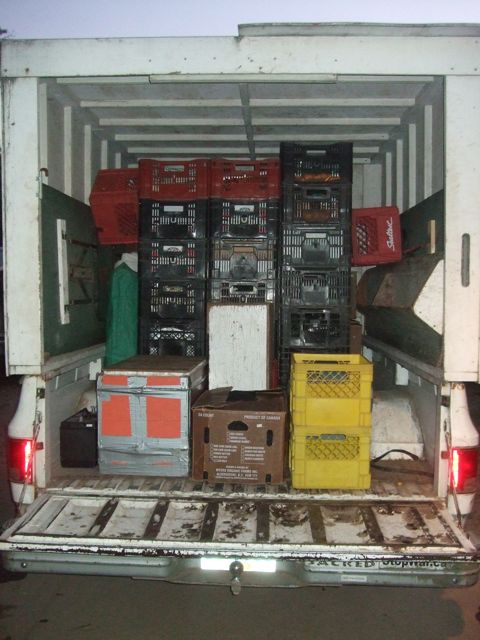
For the weekend markets, the day starts early with loading the truck -- at 5 or 6 a.m. When everything is loaded in the height of the season the market truck should look something like this:

While driving to the market we sometimes get a great view of the sunrise coming up over the mountains and valley.

And once we arrive at the market, it's time to transform an empty square, parking lot or park into a carnival-esque market scene. The White Rock market is held in a square between two condo towers. On this particular week someone threw old food from their window at market vendors during set-up. Maybe the set-up time is too early for some people on the weekend. We were lucky no one got hurt, though, given that the package fell about 15 stories.


At our Lonsdale Quay market on Saturday mornings we have the ever-able Storm who helps us. He's been part of the market scene for longer than we have and knows how to navigate piles of produce boxes and set up a market stand with his eyes closed.


Once everything is set up we occasionally get an opportunity to admire the presentation before starting to sell. If we finish setting up too early before the start of market, our customers begin to get a bit anxious for having to wait.


A major part of market set-up is presentation. Making the food look beautiful in large piles and orderly rows goes a long way to helping sell everything.


We try to be strict about only selling after the advertised opening time. At Lonsdale Quay there is no strict start time, although the market is advertised as starting at 10 a.m. Until two years ago, we started selling as soon as we were st up. But our customers started arriving earlier and earlier.

One week I pulled the truck in to begin setting up at 7:30 a.m. and there were two customers waiting who proceeded to take boxes off the truck and began rummaging through for produce. We were sold out before the market opened, much to the dismay of customers who arrived on time. That's bad market management.

The next week I arrived with a rope and a handful of coffee cards. I tied off the stand and told customers we would no longer sell before the advertised start time. I handed out coffee cards so people could get a complimentary coffee on the corner and wait. People complained fiercely, other vendors continued to sell early and the market society didn't care.

We still sell out and customers appreciate knowing when the market actually starts in order to plan their days. We've maintained strict start times since. Remember, the early bird only gets the worm. Everyone else gets some organic produce with their worm.

Every so often before the market starts a market manager comes by to talk to us. On this particular week in White Rock, Market Manager Helen came by to tell us that we should have a tent over our stall. I had forgotten the tent that morning. The health department gets upset when we don't have a tent because they're afraid birds will poop on our produce and cause mass pathogenic outbreaks. It's amazing what they can dream up in their offices.

It was a great day for working without a tent (no rain). Jeremy forgot the cash float the following week. In the past I've forgotten the tent, the scale and the float (not all on the same week). Any one of those instances could lead to a terrible day. But we managed to recover each time thanks to the generosity and ingenuity of other vendors and market volunteers.


Then we can finally get to work selling food. The weather has a major impact on how busy it will be (I understand that people don't eat on rainy days). Lonsdale Quay is the one exception to this rule. The north shore is always wetter than anywhere else in the Lower Mainland and its residents know that they have to brave the rain or spend much of their lives indoors.


If all goes according to plans, our stall is more-or-less empty within a few hours. By the way, we don't sell off produce at the end of the day for lower prices. We take it home and eat it.

When people try to get food for less than the marked price we respond in one of two ways. On a good day we simply explain that we won't undermine the price other customers have paid and that the posted price reflects the value of the food based on what it costs us to bring it to market. On a bad day we ask people to buzz off.

Our philosophy for farmers markets is to sell out rather than throw out. We could take a lot of produce to keep the stall fully stocked until the end of the day (and probably achieve some additional sales), but much more food would be wasted. Rather, we order up or down on a weekly basis depending on previous weeks' sales and the weather forecast.

Supermarkets have fully-stocked produce sections and it means that a high percentage of their produce gets thrown out. In fact, most supermarkets don't make money on produce. The real profit is made from packaged food that can sit on shelves for months and doesn't have to be thrown out. They sell produce cheap as a loss leader to get people into the store.


And before returning home to unload the market truck we stop off at the local Co-Op gas station to fill up for the next market trip. It's a good reminder that despite our attempts to sell local, we're still dependent on oil for the moment. There's still work to do.

Wednesday, August 25, 2010

Great book on human-scale farming

We are excited about the release of a new book about small-scale, local farming. Up We Grow! is written by Vancouver author Deborah Hodge for children ages 4-7. The book features photography by Brian Harris, showing small farms and farmers from around British Columbia.

The book is excellent for its portrayal of the human side of food production. Too often discussions of local food focuses on pictures of food. Up We Grow! shows the people who grow food in our communities. This is a feature of Brian Harris' photography; he captures the community and cultural elements of farming. Deborah's text engages children with questions about how they celebrate the seasons and inquiries about their favorite foods.

What we especially like about this book is that it features our farm. The text is based on visits the author did over a one-year period, documenting the activities of the farm. The farm in the book is a composite of many farms, using Brian's spectacular photography.

The book is available at bookstores around British Columbia and beyond. Kidbooks in Vancouver is hosting a book launch on Thursday, 26 August from 7-9 p.m. Check out their amazing window display here.

We have copies of the book for sale at our farmers market stands at Lonsdale Quay (Saturdays 10-3), White Rock (Sundays 9-1), Langley (Wednesdays 3-7) and New Westminster (Thursdays 3-7).