
Last week I received a request from fellow blogger and tweeter Eden Balfour to explain how we decide whether to start particular crops indoors or to direct seed them into the field. Here's a quick overview.
The first factor determining whether we start transplants indoors concerns how early we can get a crop and what the overall outcome for a crop will be. For example, we start alliums (onions, shallots, leeks) indoors in February. This family needs a long season and is photosensitive, meaning its plants respond to daylight hours to bulb up. It needs to be well established before solstice in order to take full advantage of the season's daylight.
We can get earlier crops of almost everything we grow by doing early plantings indoors. We do this for brassicas (cabbages and broccoli), lettuce, fennel, squash, tomatoes and cucumbers. Many of these crops are seeded every week in order to have a continuous crop or to ensure we have a plant ready to go in the ground when the weather is right. Squash, for example, does not hold well in transplant pots. We seed our crop three times over three consecutive weeks to ensure we have at least one set of healthy plants when the weather is right for transplanting.
In another example, we previously only direct seeded corn. But due to the low spring temperatures, we often didn't get proper germination or an early crop. By doing transplants this year, we found that we could get an early crop of sweet corn with no gaps in the bed space from poor germination. This helped to make the most out of every inch in the bed.
The second factor we consider is the cost of the seed. In the past, we did early fennel plantings indoors and later plantings were seeded directly into the beds. But the cost for 10,000 fennel seeds is now over $300. We weren't getting the germination we desired doing direct seeding and the weeds out performed the fennel in many instances. By doing all of our fennel as transplants we make the most out of our seeds, thus reducing some costs, while getting a better crop in the end.
The third factor concerns weeds. For the vast majority of crops, if you can transplant them, you have a better chance of staying on top of the weeds. We don't use plastic mulch on crops other than cucurbits (squash, cucumbers), so being on top of weeds is crucial. By transplanting, we are able to give the crops a head-start.
Crops such as spinach, dill, cilantro, rutabagas, radishes, turnips, beets, parsnips and carrots are all best done as direct seeding. They generally germinate well and for most, because of their taproots need to have an undisturbed growing environment. For spinach, dill and cilantro, the volume being seeded every week means that direct seeding is most efficient.
When direct seeding, bed preparation is of particular importance. Being able to prepare a bed in advance (up to two weeks before seeding) gives weeds an opportunity to germinate. Prior to seeding, the bed can be weeded (hoed or with a tractor-mounted basket weeder). Alternatively, a few days after seeding, the bed can be flame weeded (i.e. scorching the weeds with a propane torch). This allows the crop to emerge into a relatively weed-free bed, thus having a head-start over future weeds.
The main advantage transplanting provides is control over the crop and generally earlier crops, plus some cost savings in seed. The main disadvantage is scalability (i.e. finding efficient ways of doing transplants for larger crops/operations) and cost of start areas, whether a growing room with artificial lights or greenhouse space.
We have done all of our transplants in plastics trays in the past. This year I tried experimenting with soil blocks, which help to hold plants for longer and reduce transplant shock. What I found, however, is that we will need an entirely different setup to make soil blocks work. We'll try more in the future, but they won't necessarily work for everything and will take more space, time and care to do successfully.
So, if anyone has any other transplanting tips, I would love to hear them. Please share!
Showing posts with label seeding. Show all posts
Showing posts with label seeding. Show all posts
Wednesday, June 29, 2011


Tuesday, March 22, 2011
Growing for Gardeners: Spring Transplants
 Here we go with a new idea: We're growing certified organic veggie transplants for home gardeners.
This year we wanted to do something more than just growing veggies for our farmers markets. We're also growing to help our fellow gardeners with their own plots of land.
Every year we grow tens-of-thousands of transplants for our crops. And every year more and more of our regular customers tell us that they're trying out their own community garden plots, balcony gardens or their own backyard. And we always get requests for transplants.
This year we're growing an array of veggie starts for home gardeners to use in their own gardens. We're seeding harder-to-grow crops like broccoli and cauliflower, onions, various greens, herbs and many more.
We're also ready to take custom orders to match your own garden plan.
 Our transplants will be available at our Farmers Market stands beginning in May and direct from the farm by special arrangement. We'll also be at some special events, such as the Stone Soup Festival in East Vancouver on May 7.
To discuss your garden plans or to place a special order, please e-mail us at glenvalleychris@gmail.com.
Friday, February 18, 2011
Hints of spring on the farm
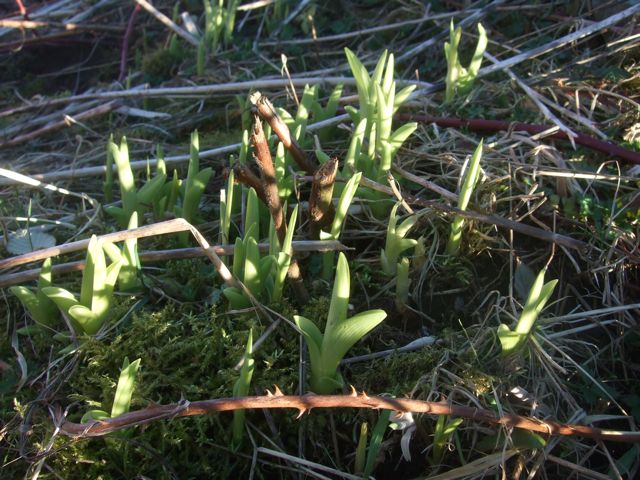 The day lilies on the farm are up . . . within a week or so I think we'll be eating the shoots!
 The lean-to cold frame is getting full with transplants. These are all onions and shallots on a heated table. The transplants come out here, where they get natural light, after the seeds have germinated and emerged.
 This is what the floor of our indoor start room looks like at the moment. Kale, green onions, tomatoes, artichokes, celery, onions and leeks are germinating at the moment.
This note on a seed shipment from Johnny's Seeds (a US company) has me wondering. Is this a warning to the purchaser of what they can (and cannot do) or is it a note for customs to tell them that it's seed for growing, not resale? I'm going to call next week to find out.
Thursday, July 22, 2010
Farm activities this month
It's already into the final stretch of July and I haven't done much to update the blog lately. Here's a summary of what's happening at this time of the year.
The fields are a constant challenge to stay on top of -- from weeds and irrigating to constant harvesting, we're experiencing busy days. Luckily the rain has held off and that has made weed management a bit better. Each week there's something new to harvest as well as another item that has gone out of season.
Our farmers market stalls are getting quite full and should be packed in another couple of weeks as we get into beans, sweet onions and tomatoes. The berries continue at full pace and we're getting the first few blueberries off of our new planting of bushes.
The freezer is beginning to fill up with frozen rhubarb and berries. Our rhubarb crop hadn't done well in the spring, but has rebounded. The harvest now will be for Aphrodite's Cafe and Pie Shop in Vancouver.
This weekend we will begin transplanting our winter crops -- cauliflower, broccoli, kale, collards and brussels sprouts. Our final seedings of carrots, parsnips, beets and beans are done. We've turned a corner where at least seeding is largely out of the way.
We're had a couple of challenging crops. We haven't had much luck with corn this year -- the sweet corn has had terrible germination and the crows got a lot of what did come up. It was hardly worth trying to weed in the end, and the beds will likely be used for winter crops. The milling corn will hopefully produce better results.
The impact of the Spotted Wing Drosophilia Fruit Fly still remains to be seen. We're finding them in the fields, but haven't had obvious damage to the fruit to make it unmarketable . . . yet. But we're warning customers about the challenges and offering full refunds on any product that people don't like.
After having to put down a goat earlier in the month due to a lymphatic infection we're now preparing to have all the other goats tested for chronic problems that can make them more susceptible to infections. In the meantime, we're milking two does and getting about 1 gallon of milk each day -- enough for drinking and making regular batches of cheese.
In the fields everything is incredible to watch. As the days shorten, the onions and shallots respond by beginning to develop their bulbs. Our flower patches are humming with activity, attracting millions of beneficial insects that are cleaning up aphids on other crops. Garter Snakes are cleaning up slugs and small rodents in the fields. The farm's new hives of honey bees are busy gathering nectar and pollen -- we should have an excellent blackberry harvest with all the pollination taking place.
In personal news, Jeremy has been accepted by Slow Food Vancouver as a delegate to this fall's Terra Madre celebration in Italy. If you're interested in helping sponsor this hard-working farmer's airfare, he would surely be grateful.
And while Jeremy is in Italy we'll be finishing the final markets and preparing for the growth of our family -- a new baby due on or about 11 November. Winter will, no doubt, be as busy or busier than summer, only in different ways.
Here's hoping your summer is going well -- bountiful gardens, great vacations if you do that kind of thing in the summer, and a great dose of sunshine.
The fields are a constant challenge to stay on top of -- from weeds and irrigating to constant harvesting, we're experiencing busy days. Luckily the rain has held off and that has made weed management a bit better. Each week there's something new to harvest as well as another item that has gone out of season.
Our farmers market stalls are getting quite full and should be packed in another couple of weeks as we get into beans, sweet onions and tomatoes. The berries continue at full pace and we're getting the first few blueberries off of our new planting of bushes.
The freezer is beginning to fill up with frozen rhubarb and berries. Our rhubarb crop hadn't done well in the spring, but has rebounded. The harvest now will be for Aphrodite's Cafe and Pie Shop in Vancouver.
This weekend we will begin transplanting our winter crops -- cauliflower, broccoli, kale, collards and brussels sprouts. Our final seedings of carrots, parsnips, beets and beans are done. We've turned a corner where at least seeding is largely out of the way.
We're had a couple of challenging crops. We haven't had much luck with corn this year -- the sweet corn has had terrible germination and the crows got a lot of what did come up. It was hardly worth trying to weed in the end, and the beds will likely be used for winter crops. The milling corn will hopefully produce better results.
The impact of the Spotted Wing Drosophilia Fruit Fly still remains to be seen. We're finding them in the fields, but haven't had obvious damage to the fruit to make it unmarketable . . . yet. But we're warning customers about the challenges and offering full refunds on any product that people don't like.
After having to put down a goat earlier in the month due to a lymphatic infection we're now preparing to have all the other goats tested for chronic problems that can make them more susceptible to infections. In the meantime, we're milking two does and getting about 1 gallon of milk each day -- enough for drinking and making regular batches of cheese.
In the fields everything is incredible to watch. As the days shorten, the onions and shallots respond by beginning to develop their bulbs. Our flower patches are humming with activity, attracting millions of beneficial insects that are cleaning up aphids on other crops. Garter Snakes are cleaning up slugs and small rodents in the fields. The farm's new hives of honey bees are busy gathering nectar and pollen -- we should have an excellent blackberry harvest with all the pollination taking place.
In personal news, Jeremy has been accepted by Slow Food Vancouver as a delegate to this fall's Terra Madre celebration in Italy. If you're interested in helping sponsor this hard-working farmer's airfare, he would surely be grateful.
And while Jeremy is in Italy we'll be finishing the final markets and preparing for the growth of our family -- a new baby due on or about 11 November. Winter will, no doubt, be as busy or busier than summer, only in different ways.
Here's hoping your summer is going well -- bountiful gardens, great vacations if you do that kind of thing in the summer, and a great dose of sunshine.
Monday, February 15, 2010
The Season Begins

"And that's the start of the season." I remember these words from John, our farmer mentor, three years ago as we planted the first seeds of the season.
It's a moment I remember each time we begin planting in early February. Jeremy and I have been farming together for three seasons, with the fourth now underway. As we mix up potting soil, fill trays and begin sowing seeds I feel excited. Much of this comes from the sense of new beginnings.
The fresh start we get every spring is a major benefit of farming. And sometimes it's also a point of frustration as farmers, particularly on the prairies, consider their land to be the domain of "next year country". That's as in "There's always next year," regardless of what didn't go well in a given season. I'm not sure if that's considered cautious optimism or not.
The 2010 season at Glen Valley Organic Farm is off to an upbeat start. With the warm winter and early spring we almost feel as though we're behind -- for the last two years we started seeding our transplants indoors with snow on the ground.
We just sent out a renewal notice to our Community Supported Agriculture Harvest Box Program and are in the process of hiring apprentices for the season. Jeremy has been doing machinery maintenance and I've been seeding our onion, shallot, leek and green onion crops. While doing a delivery of sunroots and collards into Vancouver today, Jeremy is also picking up our seed potatoes. The potatoes were dropped off at Discovery Organics by Across the Creek Organics from Pemberton.
Rhubarb is already growing and we'll get compost onto those beds later in the week. As the weather dries up later in the week we'll be getting close to being able to disk the beds. Fava beans and peas get seeded outdoors this week and I'll be planting out beets we saved from last season that will flower and produce a seed crop for us this year.
This post is beginning to feel like a bit of a shopping list, but that's actually what life feels like at the moment. Numerous lists of things to do begin piling up as the next few weeks get planned. My family is making good use of a day planner as we chart out the days remaining before the season gets busier. Weekly farm team meetings are increasingly important as we make sure everyone on the farm is in the loop with projects, activities and events.
Over the course of the season this blog will provide some weekly insight into the activities of the farm as we work to provide food to the many people who eat from our farm. Originating from a weekly e-mail to our CSA subscribers, this should provide a more organized forum for regular updates about our farm to a wider audience. In addition to farm updates, there will be recipes, thoughts and information about larger issues in agriculture and notes about agricultural-related events going on in the region.
The season has begun and we're looking forward to what 2010 might have to offer.
Subscribe to:
Posts (Atom)
